

Ultrasonic Anemometer 3D (US3D) from Thies Clima addresses these complex demands, even under harshest conditions like in a typhoon or in a sand storm.
Wind data plays a key role.
In an era defined by accelerating climate change, the growing demand for renewable energy, and the increasing reliance on automated monitoring systems, meteorological sensors must meet the highest standards of precision, durability and long-term reliability. Wind data plays a crucial role not only in aviation safety, road weather monitoring, storm forecasting, climate research, public protection but also in renewable energy planning. Accurate wind measurements are also essential for short-term predictions such as fog formation or the dispersion of hazardous substances.
Professional journal "Meteorological Technology International" highlights the application and advantages of our product in a technical article.
Open PDF
Professional journal "Meteorological Technology International" highlights the application and advantages of our product in a technical article.
Open PDF
The Ultrasonic Anemometer 3D (US3D) delivers high-precision, maintenance-free wind and sonic temperature measurements in three dimensions.
The Ultrasonic Anemometer 3D (US3D) from Thies Clima addresses these complex demands with a robust, maintenance-free design delivering high-resolution, three-dimensional wind and sonic temperature data. Designed for both research and operational use, the US3D has become a trusted solution for meteorological services, research institutions, and infrastructure operators worldwide.
The Ultrasonic 3D sensor is a series-production sensor and part of the Thies Ultrasonic xD family, which also includes the Ultrasonic 2D and Ultrasonic 1D. All models share the identical core electronics and transducers, ensuring high reproducibility and production stability. With over 100,000 Ultrasonic sensors deployed globally, this mature and proven platform ensures consistent performance and fast availability—even in high volumes.
The Ultrasonic 3D sensor is a series-production sensor and part of the Thies Ultrasonic xD family, which also includes the Ultrasonic 2D and Ultrasonic 1D. All models share the identical core electronics and transducers, ensuring high reproducibility and production stability. With over 100,000 Ultrasonic sensors deployed globally, this mature and proven platform ensures consistent performance and fast availability—even in high volumes.
| The 5 key reasons for choosing Ultrasonic 3D |
|---|
|
|
|
|
|
High-Resolution, Three-Dimensional Wind and Temperature Measurements
This technique allows for extremely accurate and instantaneous readings, even under turbulent or rapidly changing flow conditions. The sensor captures not only the horizontal wind components but also the vertical velocity, which is crucial for characterizing atmospheric turbulence and for flux computations.


Virtual Temperature: A Key Parameter in Atmospheric Analysis
When combined with humidity data, these readings yield the virtual temperature, a key parameter in meteorological modelling and stability analysis. This direct approach avoids the time delays often associated with traditional thermometers, particularly in turbulent environments, and offers excellent reproducibility over long deployment periods.
Proven Reliability in Extreme and Diverse Environments
The US3D’s solid-state design confers significant operational benefits. With no moving parts, the sensor requires no routine maintenance, making it ideal for remote or inaccessible locations. Its rugged construction ensures reliable operation even under the harshest environmental conditions. It is rated for continuous operation in temperatures from −40 °C to +70 °C and offers protection against dust and water ingress (IP65). In cold climates or alpine regions, the integrated heating system prevents ice and snow accumulation on the transducers, ensuring uninterrupted data collection throughout the year. In warm climates the heating can be switched off to reduce power consumption to a minimum, crucial for autonomous weather stations. The US3D is deployed in arctic regions as well as in desert regions, where it has demonstrated long-term stability and minimal maintenance needs, even under extreme heat and abrasive conditions.
These characteristics have led to widespread adoption of the US3D across multiple sectors. In wind energy, for example, the sensor is used for site classification, turbulence assessment, and wind resource mapping. The US3D is classified according to IEC 61400-50-1 standards for wind energy applications, ensuring it meets the rigorous requirements for use in wind farm planning/site assessment and turbine performance analysis. On bridges and in tunnels for ventilation control, it provides real-time wind data for safety-critical control systems. In urban meteorology, researchers use the US3D to study canopy-layer flows and heat island effects with high spatial and temporal resolution. Its consistent performance under both calm and extreme weather conditions has made it a dependable choice for long-term climate stations and short-term field campaigns alike.
Furthermore, the US3D is successfully used at airports, offshore wind farms, ecological flux towers, and Arctic research stations and for turbulence investigations (eddy covariance method). In aviation meteorology, for example, the US3D enhances safety and operational efficiency by delivering accurate, real-time wind data close to the runway. These characteristics have led to widespread adoption of the US3D across multiple sectors. Meteorological services have adopted the US3D as a standard replacement for traditional mechanical anemometers, aiming to improve wind measurements across both national weather and aviation monitoring networks. This transition ensures more reliable and consistent data for critical applications. Additionally, a standardized sensor network simplifies maintenance and training procedures while significantly reducing operational costs.
In all of these cases, users report not only reliable operation and low maintenance requirements but also consistent data quality suitable for both research-grade analysis and operational decision-making.
These characteristics have led to widespread adoption of the US3D across multiple sectors. In wind energy, for example, the sensor is used for site classification, turbulence assessment, and wind resource mapping. The US3D is classified according to IEC 61400-50-1 standards for wind energy applications, ensuring it meets the rigorous requirements for use in wind farm planning/site assessment and turbine performance analysis. On bridges and in tunnels for ventilation control, it provides real-time wind data for safety-critical control systems. In urban meteorology, researchers use the US3D to study canopy-layer flows and heat island effects with high spatial and temporal resolution. Its consistent performance under both calm and extreme weather conditions has made it a dependable choice for long-term climate stations and short-term field campaigns alike.
Furthermore, the US3D is successfully used at airports, offshore wind farms, ecological flux towers, and Arctic research stations and for turbulence investigations (eddy covariance method). In aviation meteorology, for example, the US3D enhances safety and operational efficiency by delivering accurate, real-time wind data close to the runway. These characteristics have led to widespread adoption of the US3D across multiple sectors. Meteorological services have adopted the US3D as a standard replacement for traditional mechanical anemometers, aiming to improve wind measurements across both national weather and aviation monitoring networks. This transition ensures more reliable and consistent data for critical applications. Additionally, a standardized sensor network simplifies maintenance and training procedures while significantly reducing operational costs.
In all of these cases, users report not only reliable operation and low maintenance requirements but also consistent data quality suitable for both research-grade analysis and operational decision-making.
Scientific-Grade Performance and Integration Flexibility
The sensor's technical specifications further reflect its scientific-grade performance. It offers wind speed measurements from 0 to 85 m/s with a resolution of 0.01 m/s and direction accuracy of ±1°. The resolution for the sonic temperature is 0.1 K. The internal sampling rate of up to 285 Hz allows researchers to capture fast-changing phenomena such as gust fronts, turbulent eddies, or wake flows behind structures.
Multiple output formats—including analog, RS485, NMEA and ASCII—ensure compatibility with modern and legacy systems. Accessories such as mounting brackets, surge protection, and interface converters support diverse applications. The mechanical design naturally deters birds without requiring additional protection.
| Specifications Ultrasonic 3D |
|---|
| Items | Typical requirement | Ultrasonic 3D specification |
| Wind speed range | 0 - 65 m/s | 0 - 85 m/s |
| Starting threshold | < 0.01 m/s | < 0.01 m/s |
| Wind Speed accuracy | 3 % | 2 % |
| Cross sensor accuracy wind speed | 2 % | 2 % |
| IEC61400-50-1 Class D | 6 | 5.4 |
| Wind direction accuracy | 5° | 2 ° |
| Sonic temperature range | -25°C …+50°C | -40°C… +75°C |
| Sonic temperature accuracy | 2 K | 0.5 K |
| Availability | 99.99% | 99.996 % |
| Internal sampling rate | 12 Hz | 285 Hz |
Conclusion
As the demand for high-quality meteorological data continues to grow, especially in the context of climate adaptation, renewable energy, and urban planning, sensors like the US3D are becoming indispensable. By combining robust engineering with scientific accuracy, Thies Clima has created a sensor that meets the needs of both today’s and tomorrow’s atmospheric monitoring challenges. Whether deployed on a high-alpine summit, aboard a research vessel, or in an automated weather station, the Ultrasonic Anemometer 3D is a reliable and precise tool for those who measure and model the atmosphere.
Other solutions in this category: Wind measurement - Ultrasonic
Ultrasonic Anemometer 1D, 2D, 3D
Ultrasonic anemometers allow the measurement of quickly changing wind parameters thanks to their acoustic measuring principle. Gust- and peak-values are acquired inertia-free with the highest precision.
Applications:
• Meteorology
• Climate measuring network
• Wind power plant
• Research
• Development

Product
Product name
Product name / Brief description

Ultrasonic Anemometer 1D
4.3865.0x.xxxUltrasonic Anemometer 1D
4.3865.0x.xxx
The Ultrasonic Anemometer 1D serves for the measurement of the horizontal air flow
of a fixed flow direction and the acoustic-virtual temperature.
The device has 5 m fix cable
Heated components:
• sensor arms
4.3865.0x.xxx
The Ultrasonic Anemometer 1D serves for the measurement of the horizontal air flow
of a fixed flow direction and the acoustic-virtual temperature.
The device has 5 m fix cable
Heated components:
• sensor arms
Ultrasonic Anemometer 1D
4.3866.0x.xxxUltrasonic Anemometer 1D
4.3866.0x.xxx
The Ultrasonic Anemometer 1D serves for the measurement of the horizontal air flow
of a fixed flow direction and the acoustic-virtual temperature.
The device has a 8-pol. plug connector
Heated components:
• sensor arms
4.3866.0x.xxx
The Ultrasonic Anemometer 1D serves for the measurement of the horizontal air flow
of a fixed flow direction and the acoustic-virtual temperature.
The device has a 8-pol. plug connector
Heated components:
• sensor arms
Ultrasonic Anemometer 1D
4.3867.0x.xxxUltrasonic Anemometer 1D
4.3867.0x.xxx
The Ultrasonic Anemometer 1D serves for the measurement of the horizontal air flow
of a fixed flow direction and the acoustic-virtual temperature.
The device has a 8-pol. plug connector and is mounted on a mast tube.
Heated components:
• sensor arms
4.3867.0x.xxx
The Ultrasonic Anemometer 1D serves for the measurement of the horizontal air flow
of a fixed flow direction and the acoustic-virtual temperature.
The device has a 8-pol. plug connector and is mounted on a mast tube.
Heated components:
• sensor arms
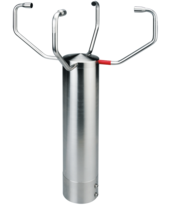
Ultrasonic Anemometer 2D
4.382x.0x.xxxUltrasonic Anemometer 2D
4.382x.0x.xxx
The Ultrasonic Anemometer 2D serves for the 2-dimensional acquisition of the horizontal components of the wind velocity, the wind direction as well as of the acoustic-virtual temperature.
Heated components:
• sensor arms
4.382x.0x.xxx
The Ultrasonic Anemometer 2D serves for the 2-dimensional acquisition of the horizontal components of the wind velocity, the wind direction as well as of the acoustic-virtual temperature.
Heated components:
• sensor arms
Ultrasonic Anemometer 2D
4.382x.3x.xxxUltrasonic Anemometer 2D
4.382x.3x.xxx
The Ultrasonic Anemometer 2D serves for the 2-dimensional acquisition of the horizontal components of the wind velocity, the wind direction as well as of the acoustic-virtual temperature.
Heated components:
• sensor arms
• ultrasonic transducers
4.382x.3x.xxx
The Ultrasonic Anemometer 2D serves for the 2-dimensional acquisition of the horizontal components of the wind velocity, the wind direction as well as of the acoustic-virtual temperature.
Heated components:
• sensor arms
• ultrasonic transducers
Ultrasonic Anemometer 2D
4.382x.4x.xxxUltrasonic Anemometer 2D
4.382x.4x.xxx
The Ultrasonic Anemometer 2D serves for the 2-dimensional acquisition of the horizontal components of the wind velocity, the wind direction as well as of the acoustic-virtual temperature.
The model no. 4.3820.4x.xxx is equipped with an additional case heating (supply:
48 V AC/DC, 280 W ) for the use at extremely critical sites, where frequent icing might be expected
Heated components:
• sensor arms
• ultrasonic transducers
• housing
4.382x.4x.xxx
The Ultrasonic Anemometer 2D serves for the 2-dimensional acquisition of the horizontal components of the wind velocity, the wind direction as well as of the acoustic-virtual temperature.
The model no. 4.3820.4x.xxx is equipped with an additional case heating (supply:
48 V AC/DC, 280 W ) for the use at extremely critical sites, where frequent icing might be expected
Heated components:
• sensor arms
• ultrasonic transducers
• housing

Ultrasonic Anemometer 3D
4.383x.2x.xxxUltrasonic Anemometer 3D
4.383x.2x.xxx
The Ultrasonic Anemometer 3D serves for the 3-dimensional acquisition of the horizontal and vertical components of the wind velocity, the wind direction as well as of the acoustic-virtual temperature.
Heated components:
• sensor arms
• ultrasonic transducers
4.383x.2x.xxx
The Ultrasonic Anemometer 3D serves for the 3-dimensional acquisition of the horizontal and vertical components of the wind velocity, the wind direction as well as of the acoustic-virtual temperature.
Heated components:
• sensor arms
• ultrasonic transducers
Ultrasonic Anemometer 3D for Cold Climate
4.383x.4x.xxxUltrasonic Anemometer 3D for Cold Climate
4.383x.4x.xxx
The Ultrasonic Anemometer 3D serves for the 3-dimensional acquisition of the horizontal and vertical components of the wind velocity, the wind direction as well as of the acoustic-virtual temperature.
The model no 4.3830.4x.xxx is equipped with an additional case heating (supply: 48
V AC/DC, 360 W) for the use at extremely critical sites, where frequent icing might be expected.
Heated components:
• sensor arms
• ultrasonic transducers
• housing
4.383x.4x.xxx
The Ultrasonic Anemometer 3D serves for the 3-dimensional acquisition of the horizontal and vertical components of the wind velocity, the wind direction as well as of the acoustic-virtual temperature.
The model no 4.3830.4x.xxx is equipped with an additional case heating (supply: 48
V AC/DC, 360 W) for the use at extremely critical sites, where frequent icing might be expected.
Heated components:
• sensor arms
• ultrasonic transducers
• housing
Matching accessories will be displayed in the detail view
Ultrasonic Anemometer Compact
Ultrasonic anemometers allow the measurement of quickly changing wind parameters thanks to their acoustic measuring principle. Gust- and peak-values are acquired inertia-free with the highest precision.
Applications:
• Meteorology
• Climate measuring network
• Wind power plant
• Research
• Development

Product
Product name
Product name / Brief description
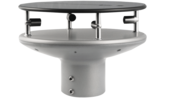
Ultraschall Anemometer 2D Compact
4.3875.xx.xxxUltraschall Anemometer 2D Compact
4.3875.xx.xxx
The Ultrasonic Anemometer compact serves for the 2-dimensional acquisition of
the horizontal components of the wind velocity, the wind direction and the acoustic-virtual temperature.
Heated components:
• base plate
• cover plate
• sensor receiving sockets
• ultrasonic transducers
4.3875.xx.xxx
The Ultrasonic Anemometer compact serves for the 2-dimensional acquisition of
the horizontal components of the wind velocity, the wind direction and the acoustic-virtual temperature.
Heated components:
• base plate
• cover plate
• sensor receiving sockets
• ultrasonic transducers
Ultraschall Anemometer 2D Compact
4.3875.6x.xxxUltraschall Anemometer 2D Compact
4.3875.6x.xxx
The Ultrasonic Anemometer compact serves for the 2-dimensional acquisition of
the horizontal components of the wind velocity, the wind direction and the acoustic-virtual temperature.
• Heater with 48V DC supply for increased icing resistance
Heated components:
• base plate
• cover plate
• sensor receiving sockets
• ultrasonic transducers
4.3875.6x.xxx
The Ultrasonic Anemometer compact serves for the 2-dimensional acquisition of
the horizontal components of the wind velocity, the wind direction and the acoustic-virtual temperature.
• Heater with 48V DC supply for increased icing resistance
Heated components:
• base plate
• cover plate
• sensor receiving sockets
• ultrasonic transducers
Ultrasonic Anemometer 2D Compact Plus
4.3875.7x.xxx 4.3875.8x.xxxUltrasonic Anemometer 2D Compact Plus
4.3875.7x.xxx 4.3875.8x.xxx
- Coming Soon -
The Ultrasonic Anemometer compact serves for the 2-dimensional acquisition of
the horizontal components of the wind velocity, the wind direction, the air pressure and the acoustic-virtual temperature.
• Ultrasonic level adjustment for stable measurements under the most extreme weather conditions (heavy rain,typhoon...)
• Trouble-free operation even with high electromagnetic interference
• Extended self-diagnosis functions and predictive maintenance
• Icing resistance according to MIL-STD-810G Meth 521.3 2008/10 with 48V supply
Heated components:
• base plate
• cover plate
• sensor receiving sockets
• ultrasonic transducers
4.3875.7x.xxx 4.3875.8x.xxx
- Coming Soon -
The Ultrasonic Anemometer compact serves for the 2-dimensional acquisition of
the horizontal components of the wind velocity, the wind direction, the air pressure and the acoustic-virtual temperature.
• Ultrasonic level adjustment for stable measurements under the most extreme weather conditions (heavy rain,typhoon...)
• Trouble-free operation even with high electromagnetic interference
• Extended self-diagnosis functions and predictive maintenance
• Icing resistance according to MIL-STD-810G Meth 521.3 2008/10 with 48V supply
Heated components:
• base plate
• cover plate
• sensor receiving sockets
• ultrasonic transducers
Ultrasonic Anemometer 2D Compact
4.3877.xx.xxxUltrasonic Anemometer 2D Compact
4.3877.xx.xxx
The Ultrasonic Anemometer compact serves for the 2-dimensional acquisition of
the horizontal components of the wind velocity, the wind direction, the air pressure and the acoustic-virtual temperature.
• PROFInet / PROFIsave with Ethernet TCP/IP interface
• Integrated web server
• Remote upgrade
• Icing resistance according to MIL-STD-810G Meth 521.3 2008/10 with 48V supply
• Ultrasonic level adjustment for stable measurements under the most extreme weather conditions (heavy rain, typhoons, etc.)
• Trouble-free operation even with high electromagnetic interference
• Extended self-diagnostic functions and predictive maintenance
Heated components:
• base plate
• cover plate
• sensor receiving sockets
• ultrasonic transducers
4.3877.xx.xxx
The Ultrasonic Anemometer compact serves for the 2-dimensional acquisition of
the horizontal components of the wind velocity, the wind direction, the air pressure and the acoustic-virtual temperature.
• PROFInet / PROFIsave with Ethernet TCP/IP interface
• Integrated web server
• Remote upgrade
• Icing resistance according to MIL-STD-810G Meth 521.3 2008/10 with 48V supply
• Ultrasonic level adjustment for stable measurements under the most extreme weather conditions (heavy rain, typhoons, etc.)
• Trouble-free operation even with high electromagnetic interference
• Extended self-diagnostic functions and predictive maintenance
Heated components:
• base plate
• cover plate
• sensor receiving sockets
• ultrasonic transducers
Matching accessories will be displayed in the detail view